India's No. 1 Design Coaching Institute

India's No. 1 Design Coaching Institute

The NID Studio Test, officially referred to by the National Institute of Design as the Studio Sensitivity Test (SST), is part of the second stage of the NID Design Aptitude Test (DAT) for B.Des admissions. It is a practical and design-oriented assessment within DAT Mains, rather than simply another drawing examination.

For students preparing for the NID entrance exam, Studio Test preparation involves more than practising drawing or model making. Candidates need to develop the ability to observe a situation, understand a requirement, generate ideas, work with available materials, and make decisions within the conditions of the test.

Important: NID does not publish a permanent list of Studio Test tasks or a guaranteed question pattern. The nature and structure of DAT Mains can change between admission cycles. Previous tasks should therefore be used to understand possible areas of preparation, not to predict the next test.

Where Does the NID Studio Test Fit Into the Admission Process?

  • NID conducts B.Des admissions through the Design Aptitude Test (DAT).

  • Candidates first appear for DAT Prelims.

  • Candidates shortlisted from Prelims proceed to DAT Mains, which includes the Studio Sensitivity Test and the In-Person Sensitivity Test.

For the 2026–27 B.Des admission cycle, NID stated that the final result would be calculated using

60% weightage for the Studio Sensitivity Test and 40% for the In-Person Sensitivity Test.

Candidates had to appear for both tests to be considered for the merit list.

The examination structure, schedule, and conditions may change for a future admission cycle. Candidates should therefore check the latest NID Admissions Handbook and official admission portal for the applicable year.

What Is the NID Studio Sensitivity Test?

The Studio Sensitivity Test (SST) is the practical component of DAT Mains. Unlike a conventional written aptitude paper, it requires candidates to respond to a design problem through observation, interpretation, making, visual thinking, and decision-making.

The objective is not simply to produce an attractive object or drawing.

A candidate may need to move through a process such as:

Student working through a studio task at BRDS
Understand the problem
Identify what the task requires
Explore possible ideas
Select an appropriate direction
Develop the response using the available time and materials
Communicate the final idea clearly

The exact activities, materials, and requirements can vary. Candidates should therefore prepare for the thinking process, rather than memorising a particular task format.

What Does the NID Studio Test Assess?

NID does not publish a universal public marking breakup assigning fixed marks to creativity, sketching, model making, originality, or other individual abilities for every Studio Test activity.

It is therefore more useful to prepare around transferable design abilities.

Observation

Candidates may need to identify visual, functional, spatial or contextual details and use them meaningfully in their response.

Idea Development

The first idea is not necessarily the most appropriate one. Candidates need to explore possibilities, select a suitable direction, and develop it into a coherent response.

Visualisation

Ideas need to be translated into visible forms. Depending on the task, this may involve sketching, diagrams, form studies, or another appropriate visual method.

Material Awareness

A studio task may require candidates to work with materials provided at the test centre. Understanding how a material bends, folds, joins, supports, or changes form can help with decision-making.

Three-Dimensional Thinking

When a task involves constructing or manipulating a physical form, candidates need to think beyond a flat drawing. Structure, proportion, balance, space, and usability may become relevant.

Problem-Solving

Studio tasks can require candidates to make decisions within specific constraints. The objective is not to wait for a perfect solution but to develop an appropriate response within the given conditions.

Time Management

A promising idea that remains unfinished is still an incomplete response. Candidates need to manage time across understanding, exploration, making, refinement, and presentation.

What Kind of Tasks Can Appear in the NID Studio Test?

There is no official permanent task list for the Studio Sensitivity Test.

Past Studio Test experiences and preparation material commonly discuss activities involving areas such as:

  • Model making

  • Material manipulation

  • Observation-based responses

  • Sketching and visualisation

  • Doodling or visual exploration

  • Responses to prompts

  • Spatial or form-based thinking

  • Creative problem-solving

These should be treated as preparation categories rather than predictions.

The important preparation principle is flexibility. Candidates should be comfortable responding when the material, prompt, context, or expected output is unfamiliar.

NID's admission documentation also makes clear that the Institute can determine the procedure for an admission cycle and that the nature and structure of examinations may change.

What You Should Know Before Preparing for the NID Studio Test

Preparing for the NID Studio Sensitivity Test requires flexibility because the assessment does not follow a permanently published task list or guaranteed material format.

Keep these points in mind:

  • There is no permanent task list: NID does not publish a fixed list of Studio Test tasks that remains the same for every admission cycle.
  • Materials are not guaranteed: A particular material or making technique should not be treated as certain to appear in the assessment.
  • Previous tasks are not predictions: Earlier Studio Test tasks can help you understand the type of thinking involved, but they should not be treated as predictions of future questions.
  • There is no universal public marking breakup: Do not rely on unofficial claims assigning fixed marks to individual abilities unless NID publishes that information for the relevant admission cycle.
  • Preparation should remain flexible: Build the ability to understand unfamiliar briefs, explore ideas, work with available materials and complete a response within the given constraints.
  • A beautiful model is not automatically a strong design response: A response should address the brief and demonstrate appropriate thinking, visualisation, construction, and decision-making.

The most useful preparation is therefore broad enough to handle an unfamiliar task while still giving candidates sufficient practice with materials, observation, visual thinking, and timed execution.

NID Studio Test Preparation at BRDS

BRDS Studio Test preparation can focus on developing practical design abilities rather than preparing from a fixed list of predicted questions.

Preparation can include:

  • Paper, clay, wire, and mixed-material exercises
  • Observation-based sketching
  • Visual exploration
  • Quick idea development
  • Timed design problems
  • Material experimentation
  • Three-dimensional thinking
  • Problem-solving under constraints
  • Review of completed responses

Hands-On Material Practice

Student shaping material during hands-on practice

Students can practise working with paper, card, clay, wire and mixed materials to understand how different materials behave and how they can be manipulated, joined, folded, shaped or structured.

The focus is on developing material familiarity rather than memorising particular model-making formats.

Observation and Visual Exploration

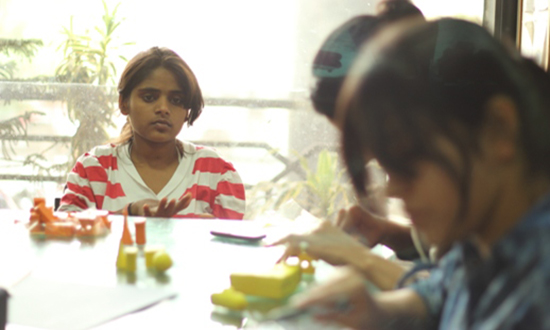
Student observing objects on the table before responding

Practice can involve observing everyday objects, people, spaces, and situations and translating observations into sketches, visual studies, or design ideas.

This can help students move from observation to a practical design response.

Timed Design Problems

Students working on a design problem with a fixed set of materials

Students can work on unfamiliar design problems within a defined time limit and with restricted materials.

This provides practice in understanding a brief, generating possible solutions, selecting a workable direction, and completing the response within the available time.

Model-Making and Three-Dimensional Practice

Student constructing three-dimensional forms

Hands-on exercises can help develop an understanding of structure, proportion, balance, spatial relationships, and construction.

The emphasis is on exploring how an idea can be translated into a physical form rather than reproducing a particular model.

Feedback and Review

Online review session where students present completed work

Completed responses can be reviewed to consider whether the solution addresses the brief, whether the chosen material approach is appropriate, how effectively the idea has been communicated, and where time or execution could be improved.

These are preparation methods and not representations of an official NID question paper, syllabus, or NID-approved task list.

BRDS is an independent design entrance preparation provider and is not authorised or franchised by NID. NID states that it does not encourage aspiring students to attend coaching classes for preparation and has not authorised or franchised anyone to conduct such classes.

The Three-Part Approach to a Studio Task

A useful way to approach a practical design problem is Understand → Explore → Execute.

1. Understand

Before beginning the making process, identify the actual requirement.

Consider:

  • What is being asked?
  • What is the intended user or situation?
  • What are the constraints?
  • What must the final response communicate?
  • Which details in the brief should not be ignored?

Understanding the brief first can prevent unnecessary work later.

2. Explore

Generate possible directions before committing to one solution.

Exploration can involve:

  • Quick sketches
  • Thumbnail ideas
  • Small structural experiments
  • Form studies
  • Testing how a material behaves

The purpose is not to produce dozens of unrelated ideas. It is to identify an approach that responds clearly to the requirement.

3. Execute

Once the direction is clear, execution becomes the priority.

The final response should demonstrate that the candidate can translate an idea into a workable outcome within the constraints of the task.

Construction, proportion, finishing and presentation should support the concept rather than distract from it.

NID Studio Test Preparation Roadmap

NID Studio Test Preparation Skills

Official NID Information and Sources

Studio preparation can be approached progressively rather than relying entirely on last-minute model-making practice.

Build the Fundamentals

Develop observation, visualisation, drawing, idea generation, and basic material familiarity.

Increase Design Practice

Work on unfamiliar prompts and practise generating more than one possible response to a problem.

Introduce Time Constraints

Complete exercises within fixed practice windows and review where time was lost.

Develop Material Flexibility

Practise with different materials rather than becoming dependent on one material or one construction method.

Simulate Studio Conditions

Attempt unfamiliar design problems using a fixed set of materials and a defined time limit.

Review and Refine

Evaluate whether the final response addressed the brief, communicated the idea and was completed effectively.

Skill What to Practise
ObservationObjects, people, spaces, and everyday situations
Idea generationMultiple solutions to one problem
VisualisationQuick sketches, diagrams, and form studies
Material handlingPaper, clay, wire, and mixed materials
3D thinkingStructure, balance, proportion, and spatial relationships
Problem-solvingConstraints and unfamiliar briefs
Time managementCompleting tasks within a fixed practice window
CommunicationExplaining the intent behind a design response

This preparation approach also aligns with the broader educational direction stated by NID, which emphasises experiential learning, creative innovation, exploratory thinking, critical problem-solving, and real-life design situations.

For the latest admission cycle, candidates should always check the official NID Admissions portal and current Admissions Handbook, because NID may amend examination dates, structure, or procedures.

The official NID B.Des programme information also describes the programme's emphasis on experiential learning, exploratory thinking, creative innovation, and critical problem-solving.

Official NID Admissions Portal:admissions.nid.edu

The exact Studio Sensitivity Test format for a particular admission cycle should always be confirmed through the latest official NID notification, admit card, and Admissions Handbook.

NID Studio Test FAQs

No. For B.Des admissions, DAT Mains includes the Studio Sensitivity Test and the In-Person Sensitivity Test.

NID's official terminology is Studio Sensitivity Test (SST). "NID Studio Test" is commonly used when referring to this stage.

No. Candidates should not expect an official list of future Studio Test questions or guaranteed tasks.

No. Preparation can include observation, idea development, visualisation, material handling, problem-solving, three-dimensional thinking and time management.

Previous tasks can help candidates understand the nature of practical design problems, but they should not become a prediction strategy.

Candidates can practise with materials such as paper, card, clay, wire, and mixed materials to develop material familiarity. However, they should not assume that the same materials will be supplied in the actual test.

NID does not publish a permanent task list covering every future Studio Sensitivity Test activity. Preparation should therefore focus on transferable design abilities.

Work on varied design problems using different materials, prompts, and time limits. The objective is to become comfortable understanding a brief and developing a response without depending on a familiar question format.

BRDS Studio Test preparation can include hands-on exercises involving paper, clay, wire, and mixed materials, along with observation-based sketching, visual exploration, and timed design problems.

No. BRDS is an independent design entrance preparation provider and is not authorised or franchised by NID. NID states that it does not encourage aspiring students to attend coaching classes for preparation and has not authorised or franchised anyone to conduct such classes.

Student working on a studio task at BRDS

Prepare for the NID Studio Test With a Flexible Approach

Preparing for the NID Studio Test is not about predicting one model, material, or question type. A more adaptable approach combines observation, idea development, visualisation, material experimentation, three-dimensional thinking, and timed problem-solving.

At BRDS, Studio Test preparation can include hands-on practice with paper, clay, wire, and mixed materials; observation-based exercises; visual exploration; and timed design problems. The focus is on developing abilities that can be applied to unfamiliar briefs rather than preparing from a fixed list of predicted tasks.

Candidates should always verify the applicable NID Studio Sensitivity Test structure through the latest official NID Admissions Handbook and admission portal before preparing for a specific admission cycle.

© 2026 — All Rights Reserved. Website Designed and Developed by Stealth Digital
Call Us